
From Possibility to a Viable Project: The Role of Feasibility in Affordable Housing
Creating more affordable housing often begins long before a project reaches design or construction. It starts with a property, an opportunity, and an important question: What is actually possible here?
That early stage of exploration is getting new support in Westchester County through the recently launched Affordable Housing Predevelopment Revolving Loan Fund, an initiative designed to help municipalities, nonprofits, and developers move affordable housing projects from planning to construction.
By helping fund critical early planning work, the initiative removes barriers that can prevent promising projects from moving forward. It can also create new opportunities for organizations that own property, including faith-based and community organizations, to better understand whether affordable housing could be a viable use.
This is the kind of news we love to see. Affordable housing feasibility and predevelopment have long been part of our work at Nexus Creative Design. Creating housing opportunities for all has always been central to our work, and investments in predevelopment give communities and organizations the support they need to explore opportunities before significant resources are committed to full design and development.
Affordable Housing Feasibility: Understanding What’s Possible
Every property comes with its own opportunities and challenges.
An affordable housing feasibility study evaluates whether a property can realistically support housing before significant resources are committed to design and development. It can examine zoning, site constraints, potential unit yield, parking, building configuration, approvals, and other factors that influence whether a project is viable.
For an affordable housing developer, that may mean understanding how many units a site can support, how zoning will shape development, or whether a potential acquisition makes sense.
For a nonprofit or community-based organization, it may mean determining whether an existing property can support housing alongside current programming.
For a church or faith-based institution, it may mean looking differently at excess land, parking areas, former schools, parish houses, rectories, convents, or portions of existing buildings that are no longer being fully utilized. For faith-based organizations considering affordable housing or redevelopment of underutilized property, feasibility can help determine what a site can support while accounting for existing community uses.
The circumstances may be different, but the first step is the same: understanding what is possible before deciding how to move forward. That’s where Nexus comes in.
Nexus Creative Design works with affordable housing developers, nonprofits, community-based organizations, faith-based institutions, and other mission-driven partners to evaluate project and property viability.
Our affordable housing feasibility and predevelopment services may include:
Site + Property Feasibility: zoning, site constraints, existing conditions and development potential
Programming + Yield Studies: potential unit counts, building area, uses, parking and development scenarios
Conceptual Planning + Design: site planning, building massing, test fits and early design studies
Land Use + Approval Strategy: required approvals, zoning considerations, potential variances and municipal process
Municipal Land Use Consultation: presenting feasibility findings to municipal land use staff to gain early feedback, identify potential concerns and gauge receptiveness to the proposed development
This early work helps establish a clearer understanding of a property’s potential, identify challenges early in the process, and determine whether there is a viable path forward.
Affordable Housing Feasibility in Practice
Across Westchester County and the surrounding region, feasibility looks different for every property. Sometimes it means testing the development potential of a site. Other times, it means looking at an existing building or underutilized property in a new way. And in some cases, the early feasibility work becomes the foundation for a project that ultimately moves into design and construction.
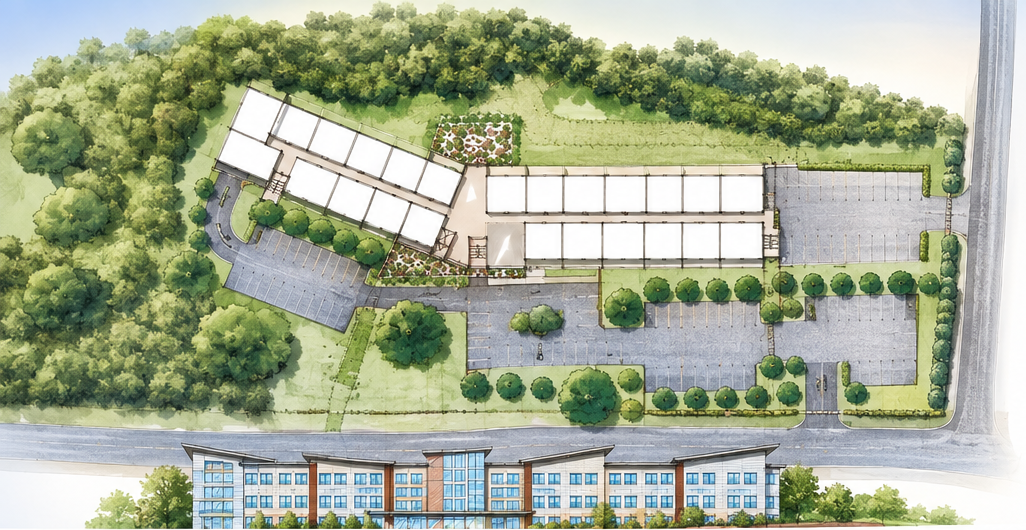
25 MALCOM | OSSINING, NY | MASTER PLANNING + FEASIBILITY STUDY
Explored site capacity, building configuration and development opportunities while responding to existing topography, neighborhood context and site constraints.
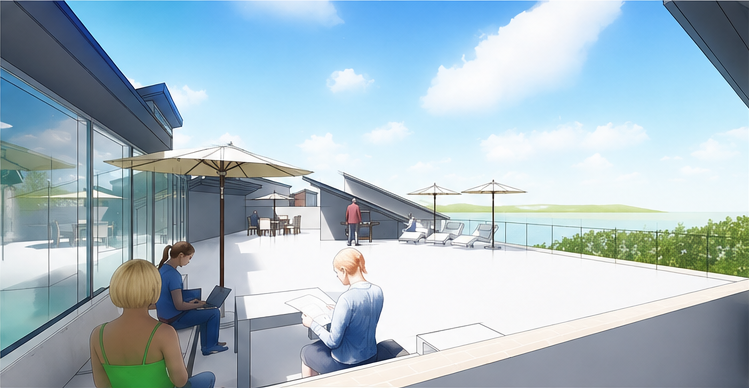
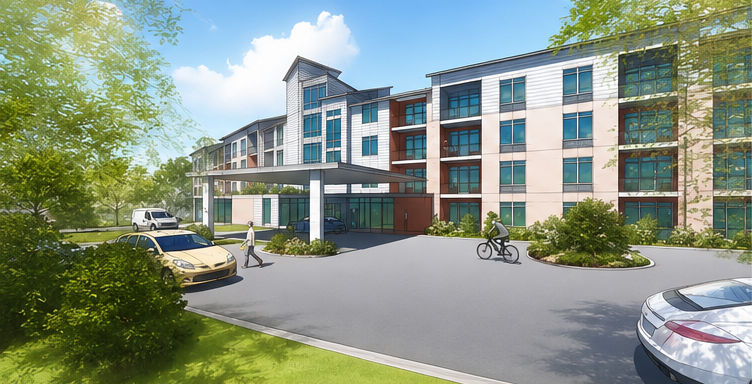
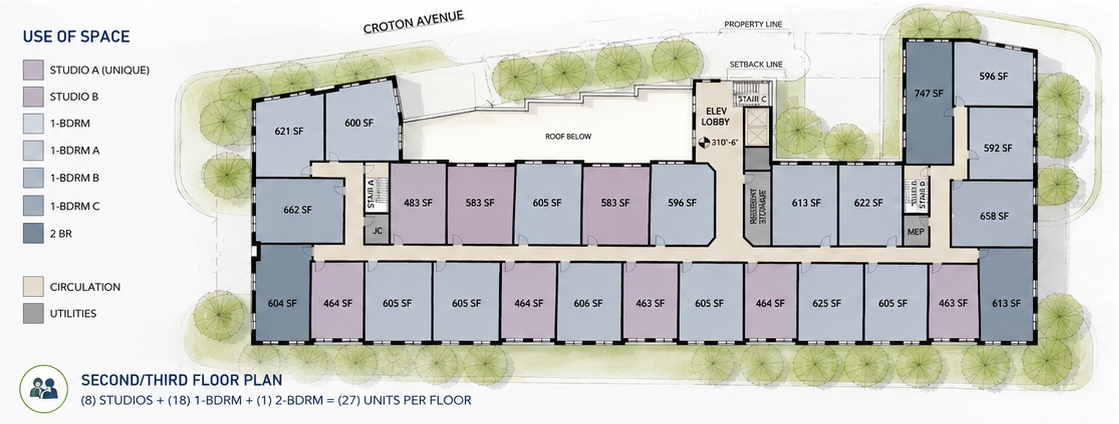
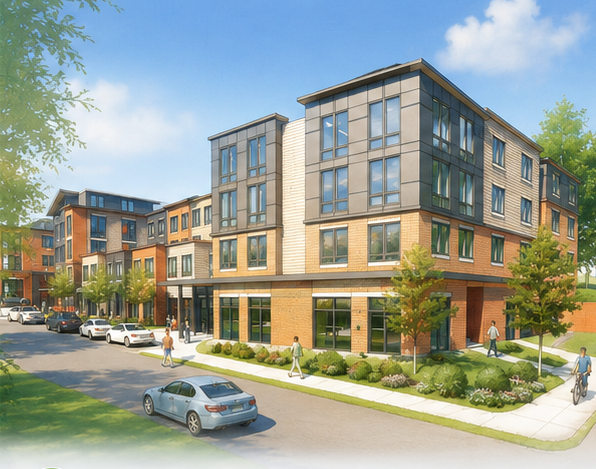
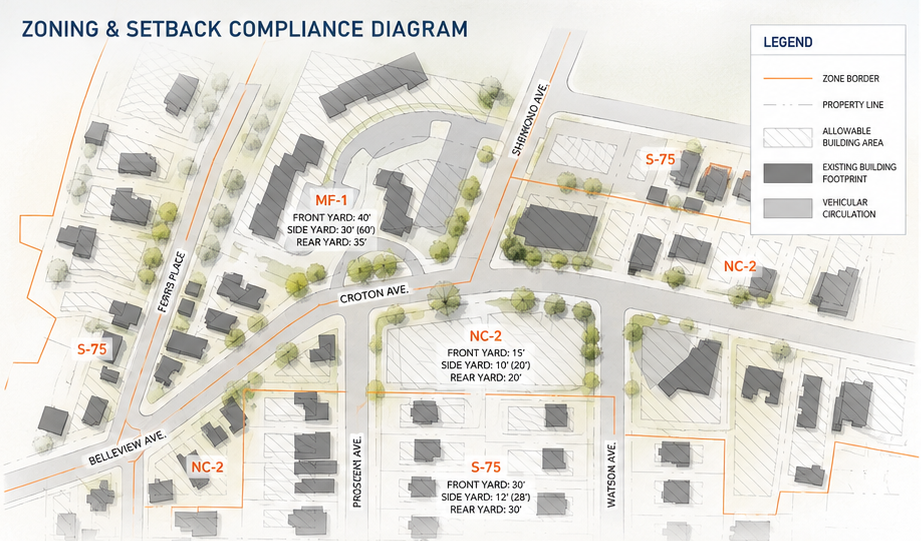
136 CROTON AVENUE | OSSINING, NY | MASTER PLANNING + FEASIBILITY STUDY
Tested the site’s development potential through zoning analysis, conceptual planning and evaluation of potential unit yield to define a viable development approach. The feasibility study ultimately advanced into a full project, with opening anticipated by the end of 2026.
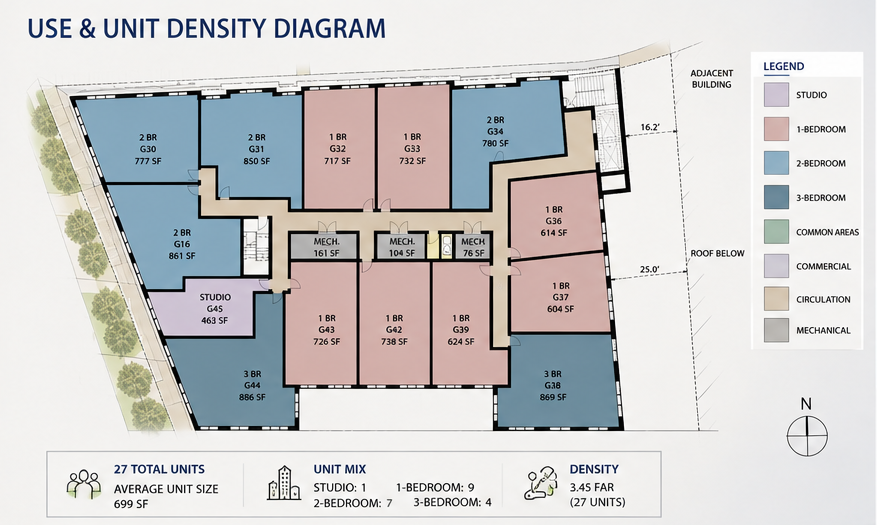
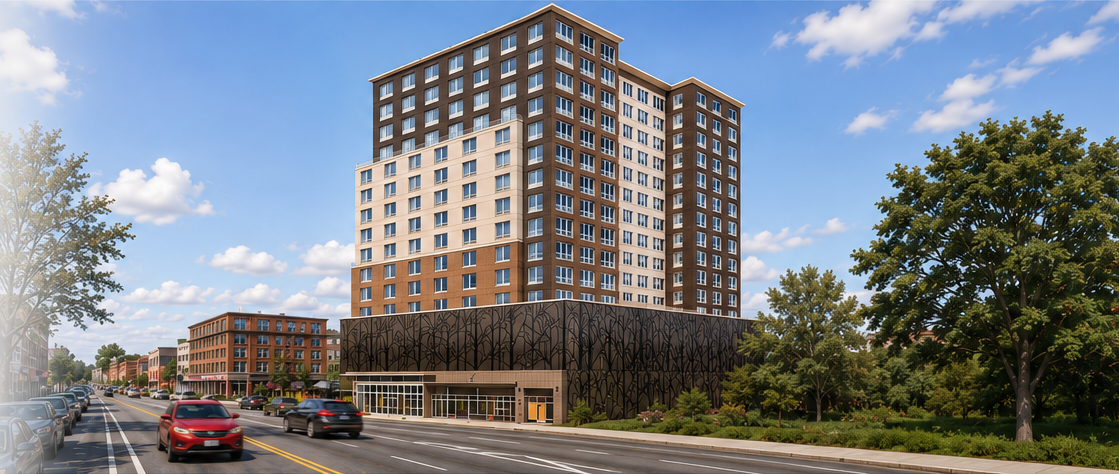
THE PARKER | YONKERS, NY | MASTER PLANNING + FEASIBILITY STUDY
Navigated numerous zoning restrictions and site challenges to identify a viable development approach. The feasibility study provided the foundation for the developer to move the project forward, with construction anticipated to begin in early 2027.
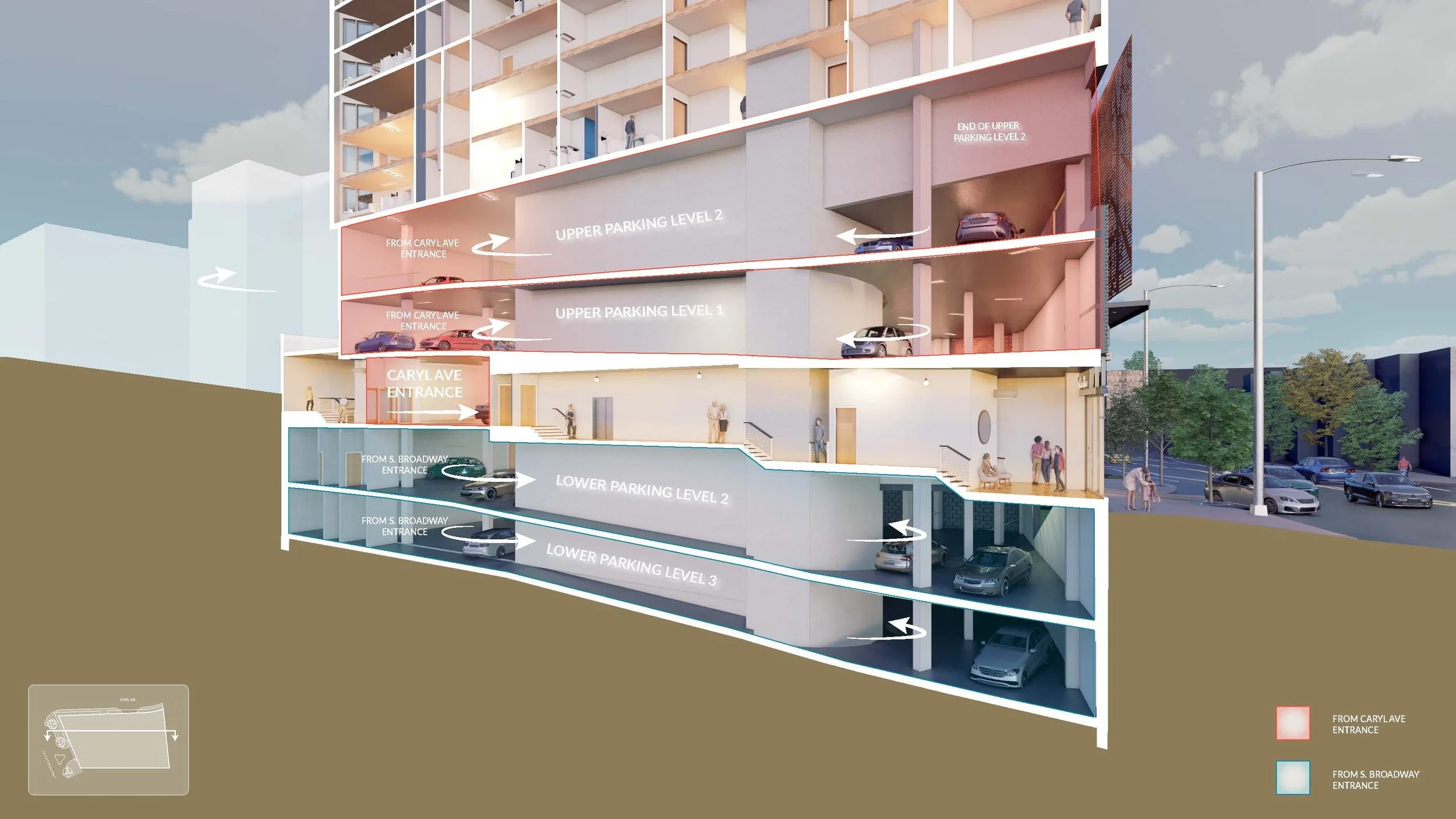
FAITH-BASED PROPERTY | AFFORDABLE HOUSING + COMMUNITY USE FEASIBILITY
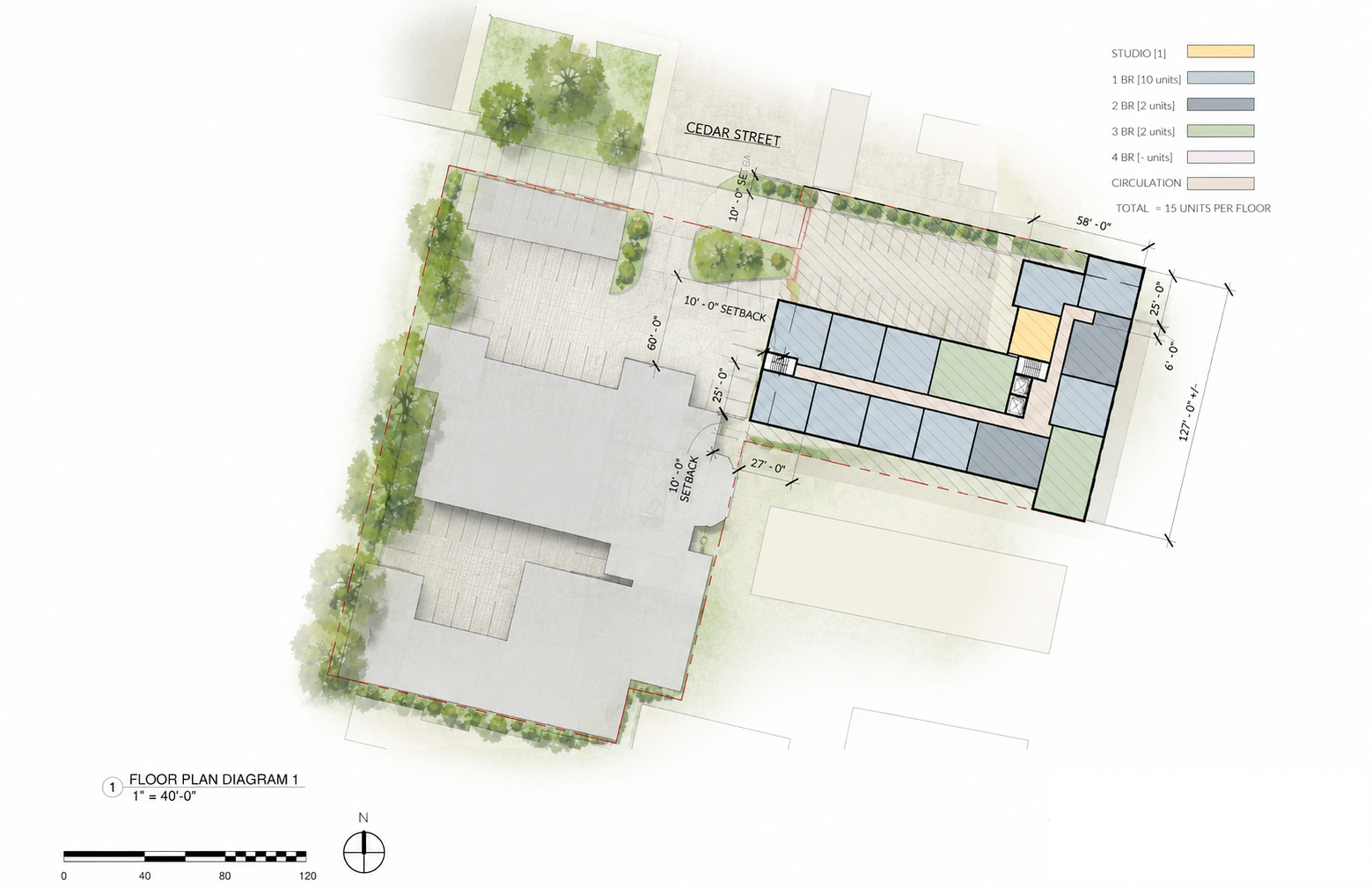
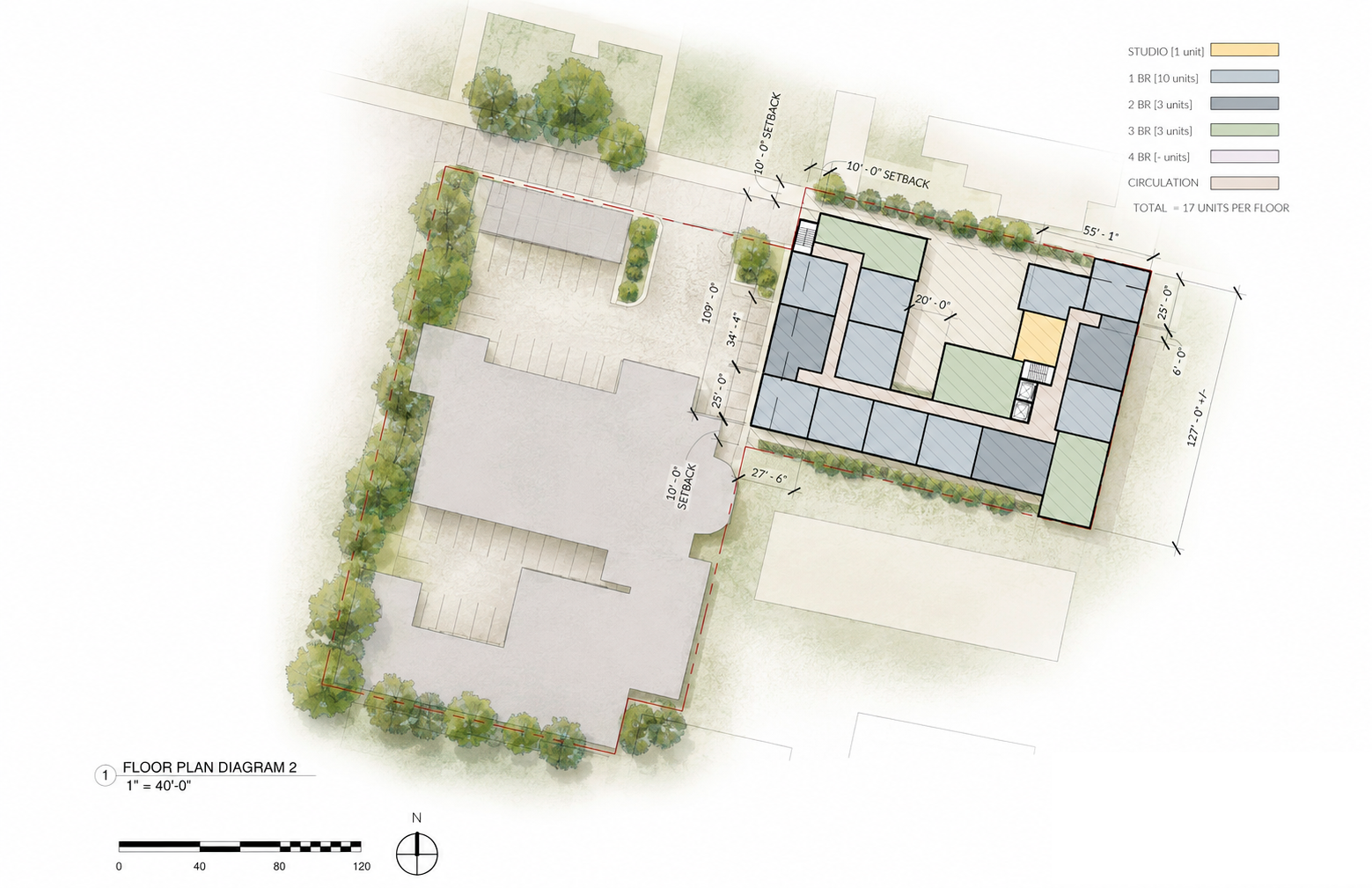
Following the merger of two congregations, an underutilized church property was evaluated for affordable housing while preserving an important community use. Conceptual studies explored how new housing could be accommodated while maintaining the existing food pantry that had grown to serve a significant need in the surrounding community.
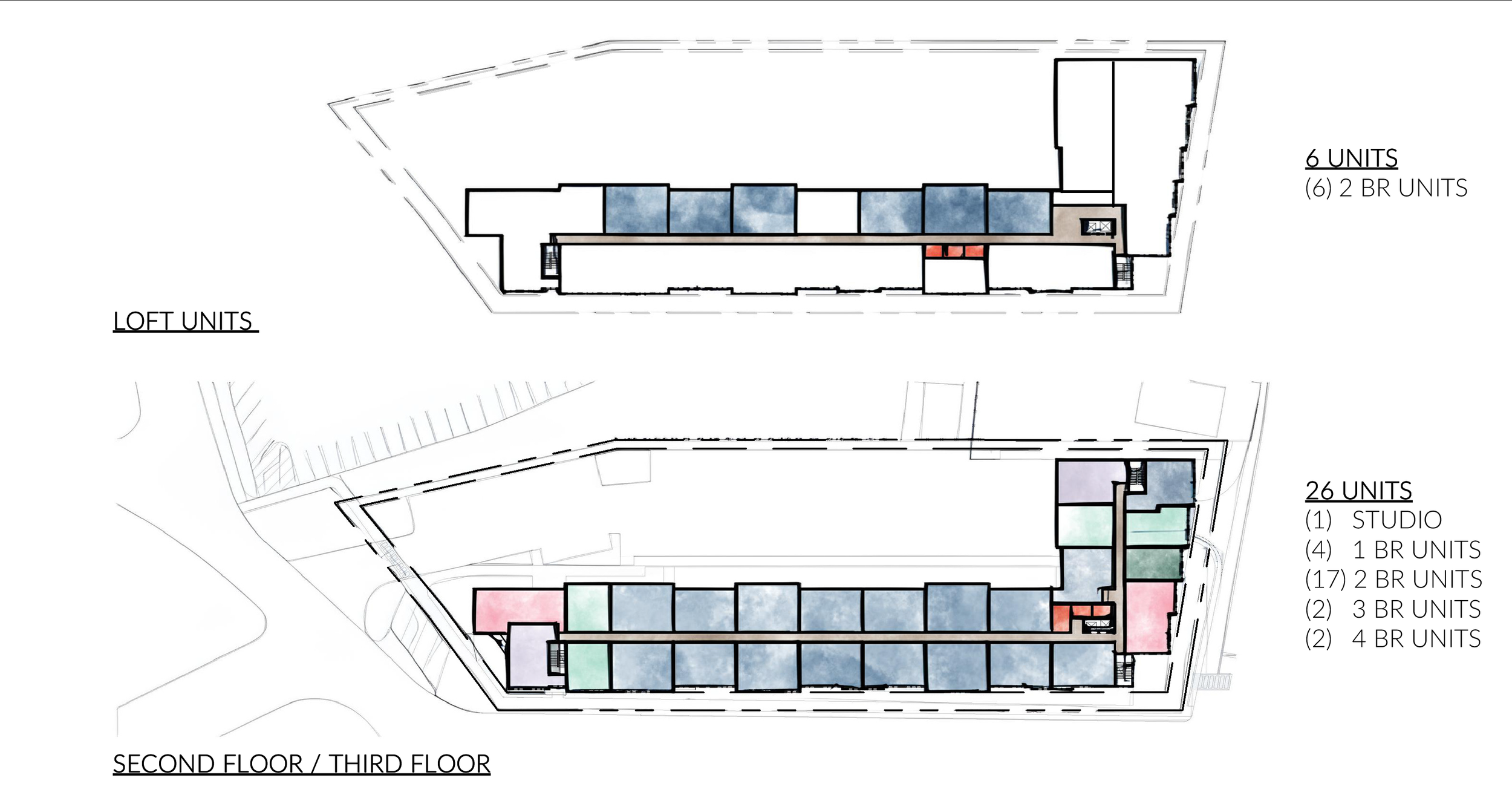
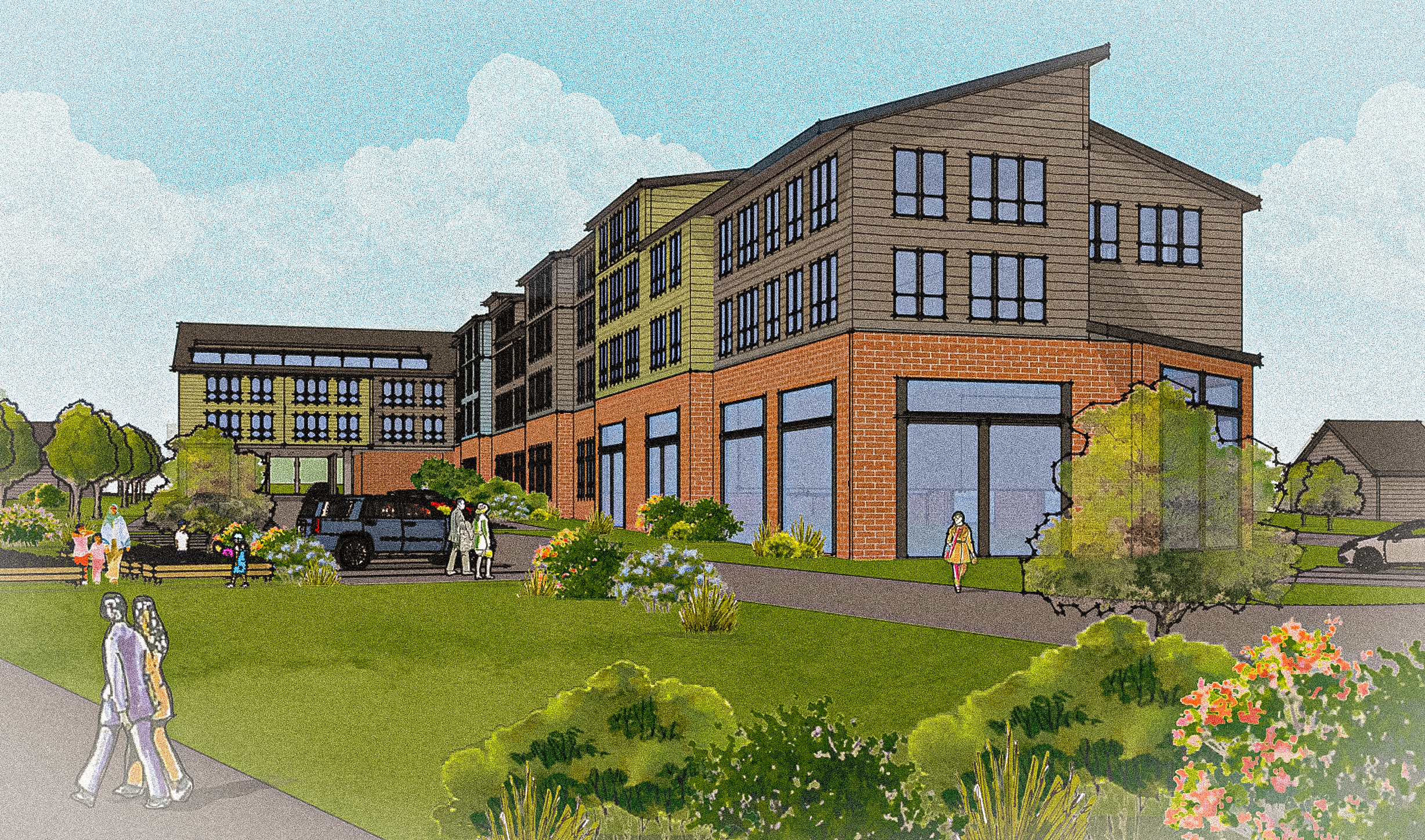
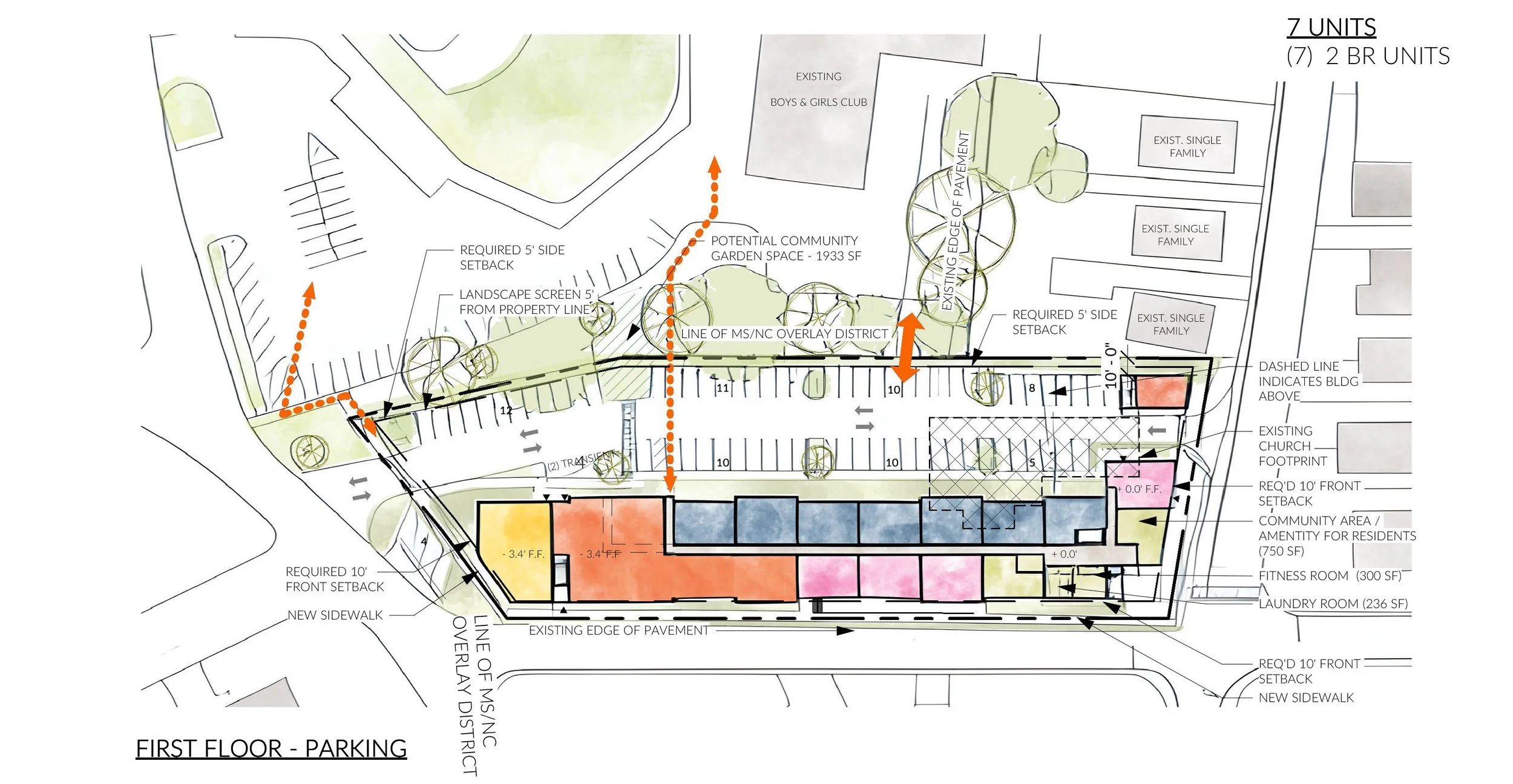
FAITH-BASED PROPERTY | PROGRAMMING + DEVELOPMENT FEASIBILITY
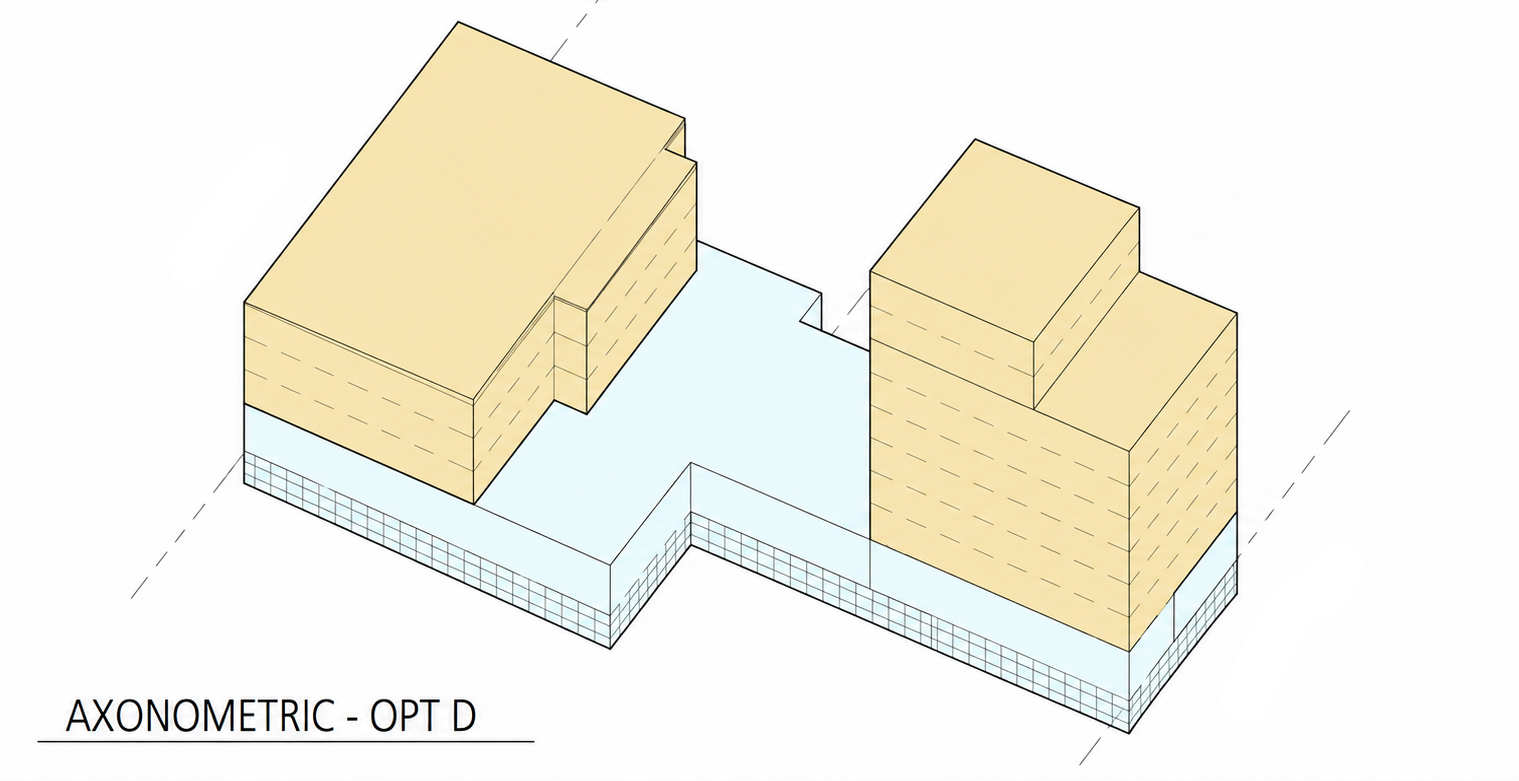
Evaluated zoning and development potential for a church seeking to retain two floors for its own programmatic use while exploring opportunities for housing above. Conceptual studies tested what could be accommodated to determine overall project feasibility.
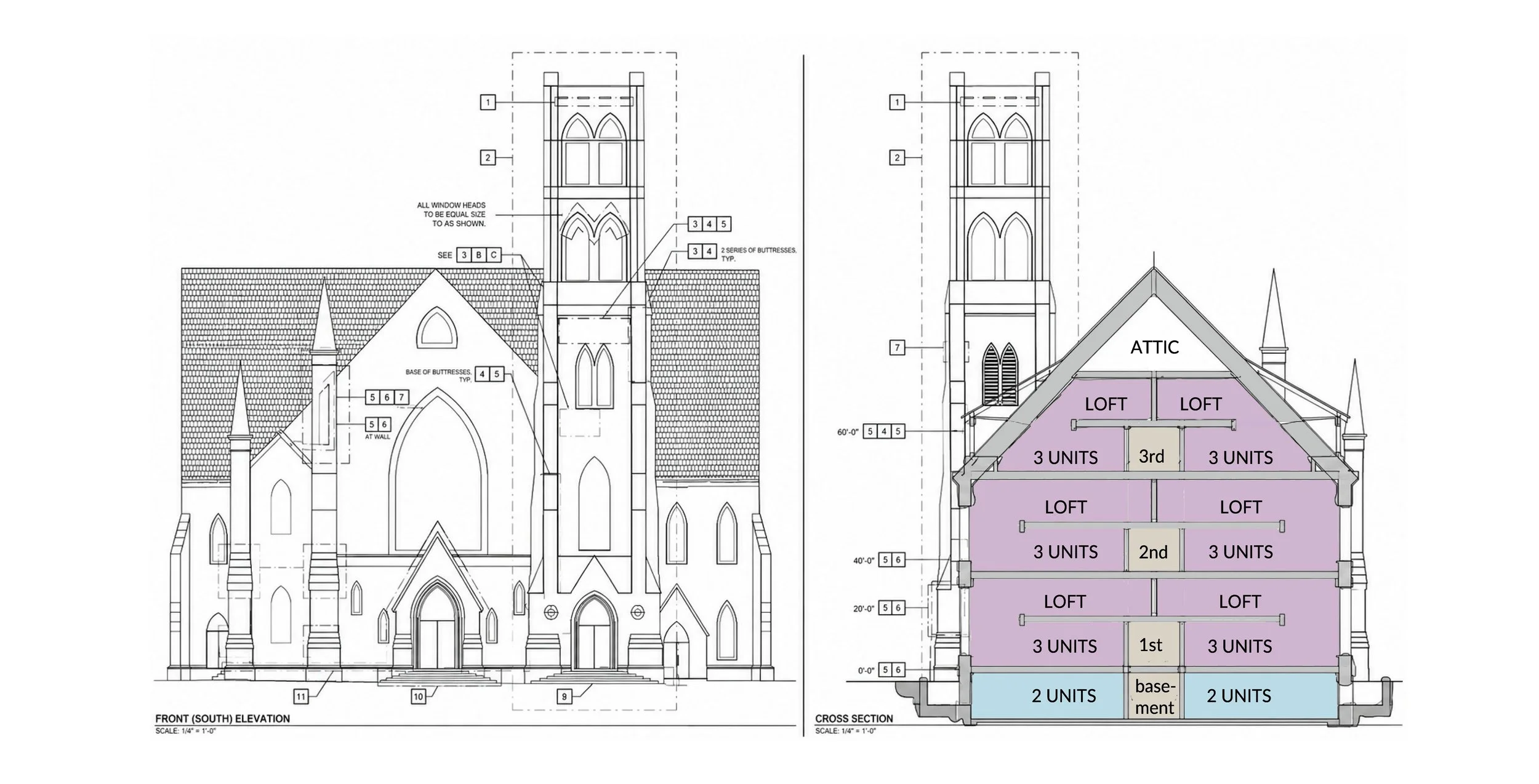
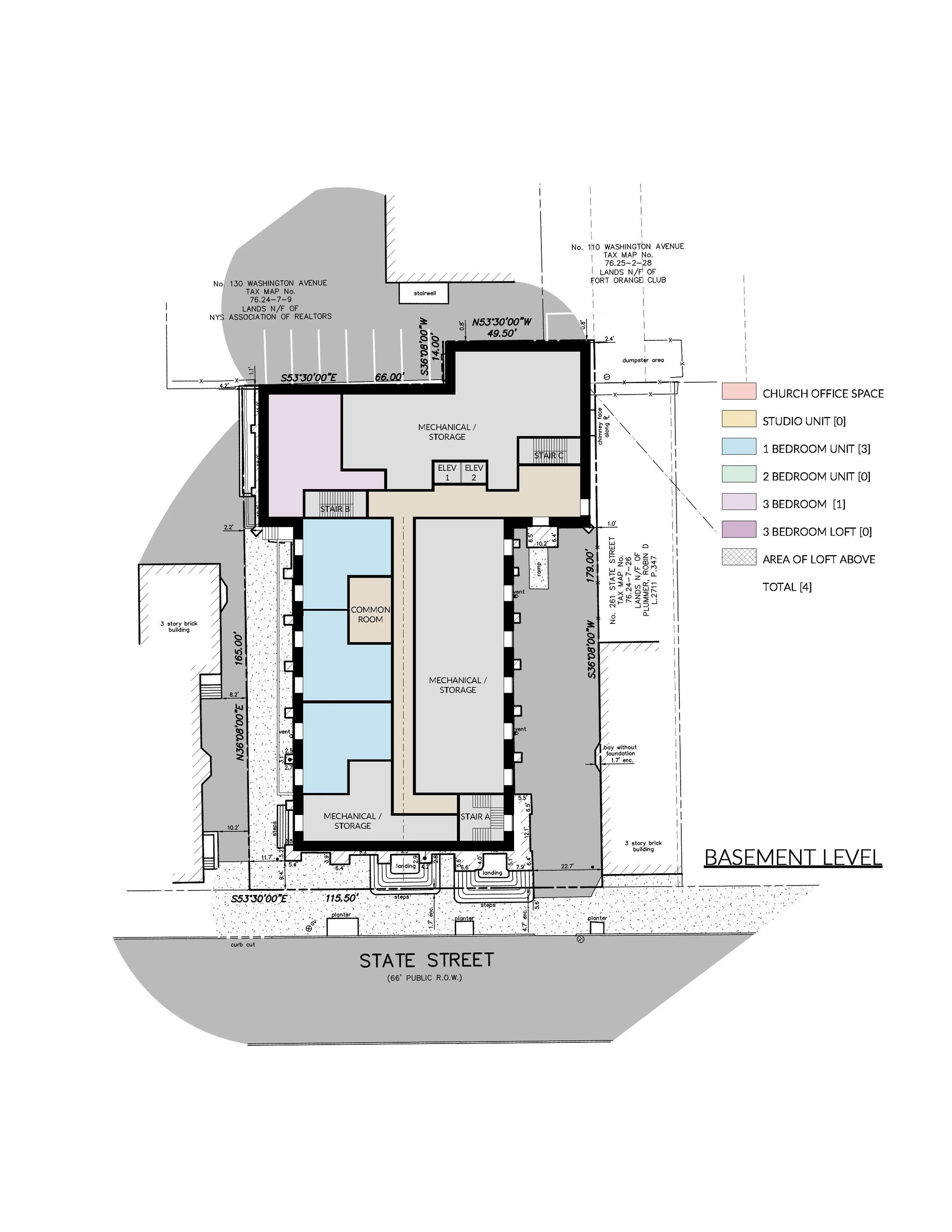
FAITH-BASED PROPERTY | ADAPTIVE REUSE + HOUSING FEASIBILITY
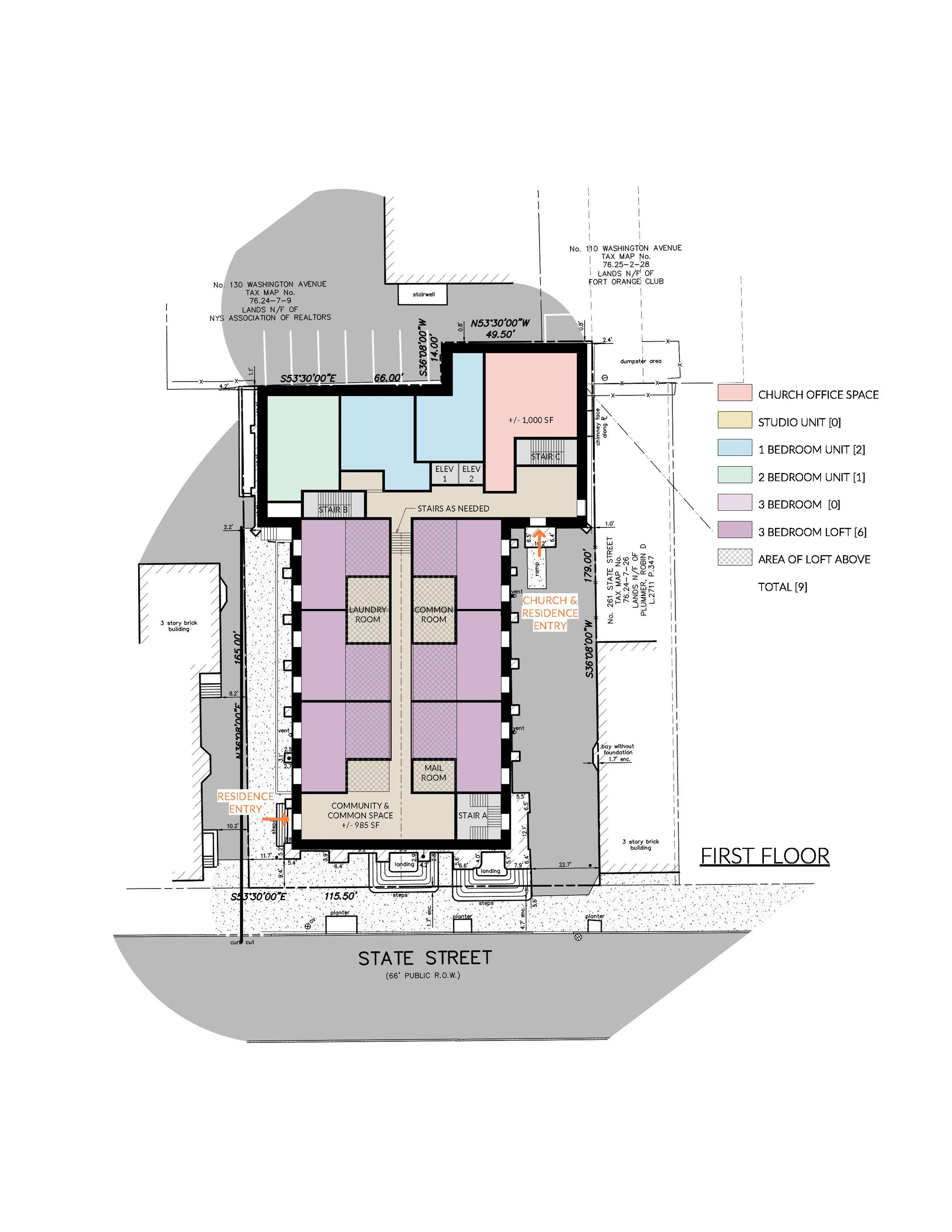
Explored the potential to convert an existing church into housing as the cost and upkeep of the property became increasingly difficult for the congregation to maintain. Conceptual studies evaluated how the building could be adapted for residential use, allowing the congregation to relocate while giving the property a viable new purpose.
A Starting Point for What Comes Next
Across each of these projects, feasibility provides an opportunity to ask questions early, understand the realities of a property, and make informed decisions about what comes next.
For organizations with underutilized property, that can mean identifying opportunities that may not have been obvious. For developers considering a site or acquisition, it can help determine whether zoning, site conditions and development potential support the project. For mission-driven organizations, it can help explore ways to create affordable housing while maintaining programs and uses that remain important to the community.
New resources like Westchester County’s Affordable Housing Predevelopment Revolving Loan Fund can help make this important early work more accessible. And while this particular initiative is focused on Westchester, we hope it signals the beginning of similar opportunities for communities throughout the region.
Affordable Housing Feasibility: Common Questions
-
An affordable housing feasibility study is an early evaluation of a property’s potential for housing development. Depending on the property and project goals, it may consider zoning, site constraints, potential unit yield, parking, building configuration, existing uses, required approvals and other factors that can affect whether a project is viable.
-
Feasibility can be explored for vacant or underutilized land, existing buildings, potential acquisitions, and properties owned by nonprofits, community organizations or faith-based institutions. This may include excess land, parking areas, former schools, parish houses, rectories, convents, churches and other spaces that are no longer being fully utilized.
-
Feasibility is most valuable early in the process, before significant resources are committed to design, acquisition or development. Understanding zoning, site conditions, development potential and potential challenges early can help determine whether there is a viable path forward and inform the next steps.
Have a Property or Housing Idea?
If your organization owns a property, is considering an acquisition, has identified an opportunity for affordable housing, or has space that is no longer being fully utilized, Nexus Creative Design provides feasibility, planning and predevelopment services to help developers, nonprofits, municipalities and faith-based organizations understand what may be possible and establish a roadmap for moving forward.
Exploring what may be possible does not require committing to a project. It starts with understanding the opportunities your property may hold.